
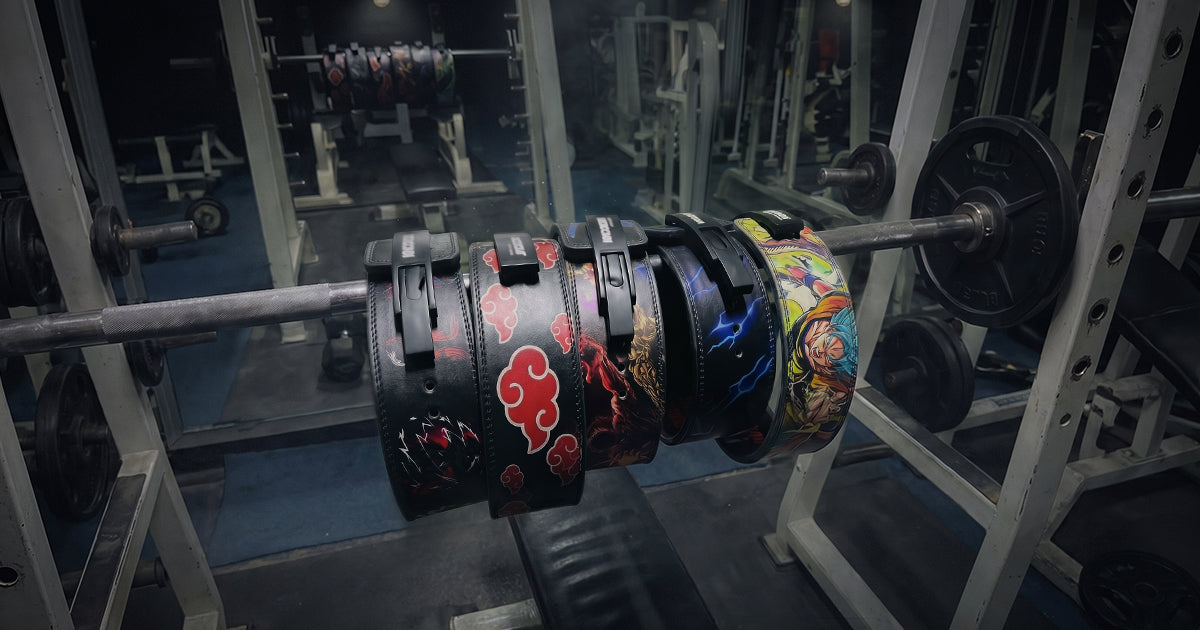
At Knockout, we started making gym gear because two brothers got tired of choosing between belts that looked good and belts that actually held up under a heavy squat. That's still the standard every weight lifting belt we build has to meet. If you're shopping for your first weight training belt, or trying to figure out whether a lifting belt for men works differently than one built for a woman, this guide walks through exactly what a belt does, who needs one, and how to wear it correctly.
What Does a Lifting Belt Do?
The main weight lifting belt purpose is to increase intra-abdominal pressure. When you brace against a belt and breathe deep into your stomach, the belt gives your core something to push against. That creates a rigid, pressurized cylinder around your midsection that stabilizes your spine under heavy load.
So what does a lifting belt do in practical terms? It won't lift the weight for you, and it won't fix bad form. What it does is:
- Give your abs and lower back a surface to brace against
- Reduce excessive spinal flexion during heavy lifts
- Help you generate more total-body tension, which can add a few extra pounds to the bar
- Provide feedback so you know when your brace is actually solid
Think of it less as back support and more as a bracing tool. A good belt rewards a strong brace and makes a weak one obvious — which is why we build ours from full-grain leather rather than soft neoprene. It needs to hold its shape when you push into it, not fold.
Why Is a Belt Used for Deadlift?
The deadlift puts enormous shear force on the lower spine, especially at the bottom where your back is most rounded and vulnerable. This is exactly why lifters ask why is a belt used for deadlift more than for almost any other movement.
When you brace against a belt before pulling the bar, you force your deep core muscles — obliques, transverse abdominis, and erector spinae — to work together to keep your spine neutral. Without that pressure, your torso can round forward under load, shifting stress onto your discs instead of your muscles. A belt doesn't replace bracing technique, but it gives you something concrete to brace against, which is why most competitive lifters wear one for their heaviest pulls.
Powerlifting Weight Lifting Belt vs. Squat Belt

Not all belts are built the same, and the difference matters depending on your goals.
Our Powerlifting Lever Belts 10mm thick, full-grain leather, same width all the way around — are built for exactly this. A uniform width means consistent pressure whether you're bracing for a squat, bench, or deadlift, which is why most competition federations require this style. The lever buckle also means you can lock the belt to your exact size in one motion between sets, instead of fumbling with a prong under a heavy bar.
A squat belt can technically be any style, but many lifters prefer a lever or self-locking design because it's fast to adjust and still gives strong front-and-back bracing. If you only buy one belt, a 10mm leather lever belt covers squats, deadlifts, and heavy pressing without needing to switch styles between lifts.
Lifting Belt for Men vs. Women Lifting Belt
Sizing, not function, is the biggest difference between a lifting belt for men and a women lifting belt. The bracing mechanics are identical — everyone benefits from the same intra-abdominal pressure principle, regardless of gender.
Where it changes is fit. That's why we cut our belts across a full S–XXL range rather than one-size-fits-most, so the belt sits correctly above the hip bones without digging in, whether you've got a shorter torso or a wider frame. Before you order, check the size chart on the product page and measure around your natural waistline — not your pant size — for the most accurate fit.
How to Wear a Weight Belt
Knowing how to wear a weight belt correctly is what separates a helpful tool from a wasted purchase. Follow these steps:
- Position it right. The belt should sit above your hip bones and below your ribcage, roughly covering your navel. Too high and it digs into your ribs; too low and it won't support your lower back.
- Buckle it snug, not tight. You should be able to take a full breath before bracing. If you can't inhale deeply, it's too tight — loosen it a notch.
- Brace before you lift. Breathe deep into your belly, push your abdominal wall out against the belt on all sides, then hold that pressure through the lift.
- Reset between reps. Release and re-brace for each rep on sets like squats, rather than holding one breath for the whole set.
-
Save it for working sets. Most lifters only put the belt on for sets above 80% of their working max, using warm-ups to build bracing skill without it.
A common mistake is relying on the belt to hold the torso upright instead of actively bracing against it. The belt only works if your muscles are doing the work — it amplifies your brace, it doesn't replace it.
Weight Lifting Belt for Beginners: Do You Need One?
This is one of the most common questions we get from first-time buyers, and the honest answer is: not right away. A weight lifting belt for beginners can actually mask poor bracing technique if it's introduced too early. Spend your first few months learning to breathe and brace properly without a belt so your core builds real strength and coordination.
Once you're squatting or deadlifting with loads that feel genuinely heavy — often cited as 1.5 to 2 times bodyweight, though this varies by lifter — a belt becomes a useful addition rather than a crutch. If you're starting out and want a lower-commitment option, our self-locking belts are a good entry point: lighter, quicker to size, and priced for someone still building their home gym setup, before stepping up to a full 10mm leather lever belt as your numbers climb.
Finding Your Belt

When comparing options in our weightlifting belt collection, prioritize:
- Thickness and material: Our 10mm leather lever belts hold firm under max-effort lifts; self-locking styles trade a bit of rigidity for speed and comfort.
- Buckle type: Lever belts lock fast once sized correctly; self-locking buckles are beginner-friendly and quick to adjust set to set.
-
Fit over style: Check the size chart, try it seated in a deep squat position, and make sure it doesn't ride up or dig into your ribs.
A good belt is a small investment that makes a real difference once you're training with serious intensity. Learn to brace first, add the belt when the weight demands it, and you'll get the stability without losing the core strength that got you there. First order on the site gets 10% off with code KNOCKOUT FAMILY, and orders over Rs. 4,500 ship free across Pakistan.

Leave a comment
All comments are moderated before being published.
This site is protected by hCaptcha and the hCaptcha Privacy Policy and Terms of Service apply.